

Software Is Replacing Hardware in Vision Care. Here’s Why That Matters
How AI and smartphones are replacing expensive hardware to make high-quality vision assessment accessible to everyone
For more than a century, getting an eyesight prescription has required the same basic process. Patients visit an optometrist or ophthalmologist, sit in front of thousands of dollars’ worth of diagnostic equipment, and rely on trained professionals to determine which lenses provide the clearest vision. It is a process that has served the industry well, but one designed for a world where vision care could only occur in a clinic.
Today, that assumption is beginning to change.
Advances in smartphone cameras, computational imaging, and artificial intelligence have made it possible to move one of healthcare’s most equipment-intensive procedures from specialised hardware to software. At OptikosPrime, we believe this shift has the potential to fundamentally change how vision care is delivered, making high-quality vision assessment accessible to billions of people who currently lack access to it.
The real challenge isn’t treatment. It’s access
According to the World Health Organisation, more than 2.2 billion people worldwide live with vision impairment or blindness, and at least 1 billion of these cases remain preventable or unaddressed. In many cases, the necessary treatment is surprisingly simple. A pair of prescription glasses can dramatically improve education, employment opportunities, productivity, and quality of life.
The problem is that billions of people lack regular access to eye examinations.
Traditional vision assessment depends on expensive diagnostic equipment, trained professionals, and dedicated clinical facilities. These requirements make eye care difficult to scale, particularly in rural communities and low-resource settings, but they also create bottlenecks in developed markets where growing demand continues to outpace available capacity.
Moving vision testing from hardware to software
For the past five years, our team has been working on a question that many believed was impossible to solve: could a smartphone estimate a person’s refractive error with clinically meaningful accuracy?
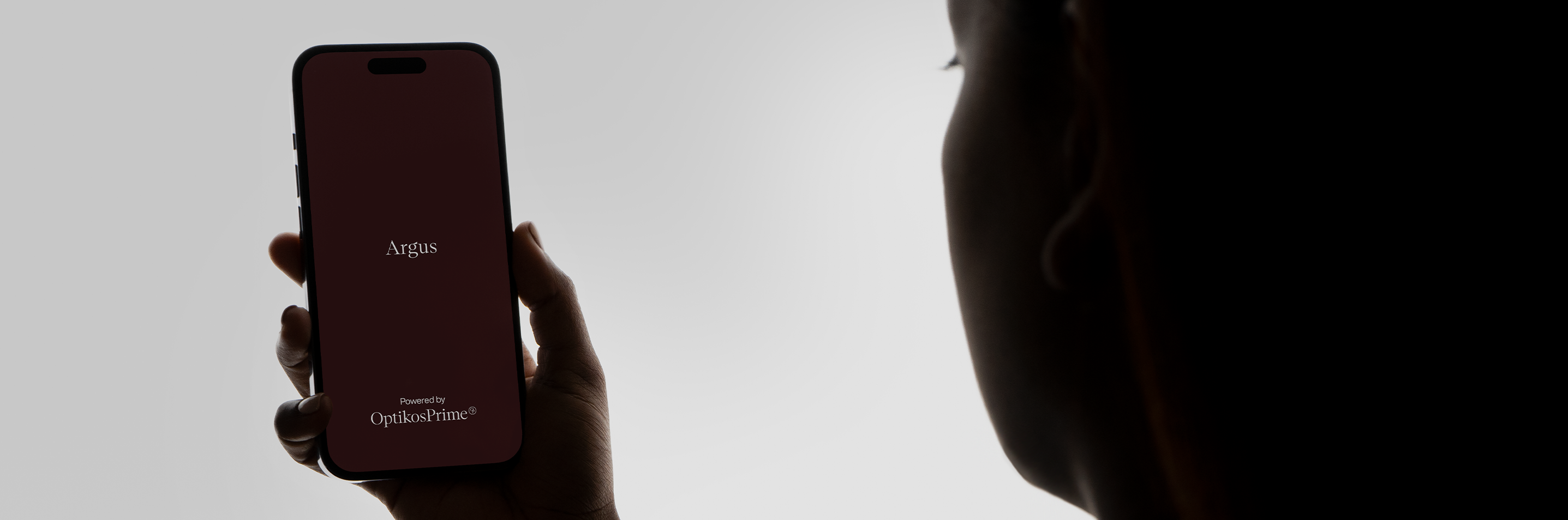
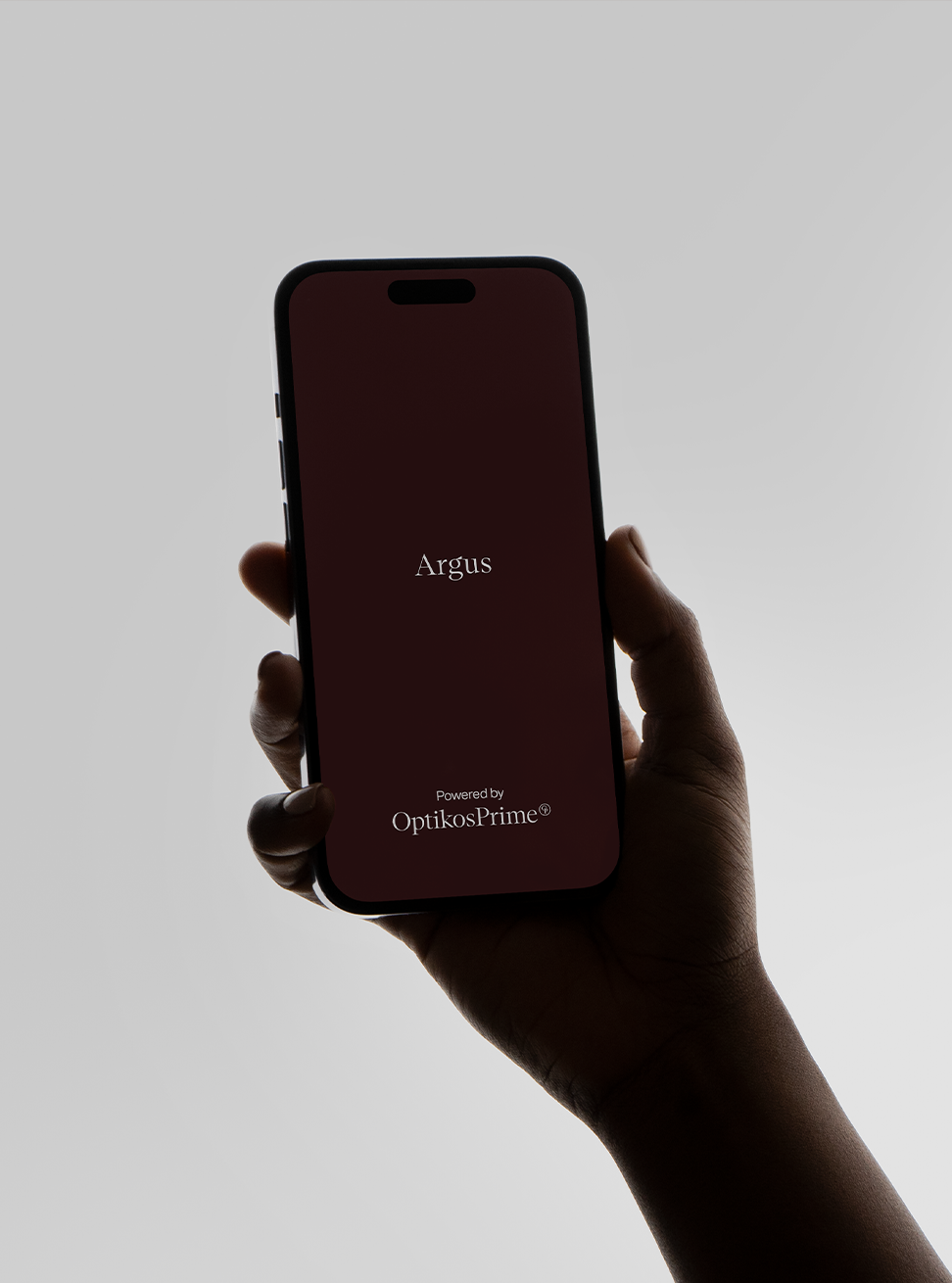
Rather than attempting to build smaller or cheaper hardware, we chose a different path. By combining analytical optics, computer vision, and machine learning, Argus estimates refractive error directly from smartphone images. Instead of relying on physical lenses and specialised diagnostic equipment, the software analyses how light interacts with the eye and predicts the required corrective prescription.
As Professor Tony Pansell from St. Erik Eye Hospital and the Karolinska Institute explains:
“Argus advances objective refraction by leveraging mobile technology to minimise environmental interference. Using a hybrid of analytical models and machine learning, it currently achieves accuracy within ±0.5D, with a trajectory toward ±0.25D.”
This approach doesn’t eliminate the need for eye care professionals. Rather, it removes one of the largest barriers to entering the eye care system.
Why this matters
When vision assessment no longer depends on large, stationary equipment, the possibilities extend far beyond convenience.
Healthcare providers can reach patients who previously had little or no access to vision services. NGOs can screen significantly more people without transporting expensive equipment or relying on scarce specialist resources. Online optical retailers can help customers obtain prescriptions without interrupting the purchasing journey. Governments can integrate vision assessment into broader public health programmes at a fraction of today’s cost.
As Sumrana Yasmin, Deputy Technical Director for Eye Health and Uncorrected Refractive Error at Sightsavers, explains:
“Access to clear vision shouldn’t depend on geography or resources. Innovations like Argus have the potential to transform how communities worldwide receive eye care by bringing accuracy, efficiency, and opportunity to millions who are currently underserved.”
Help shape the future of vision care
We’re currently working with leading optical retailers, NGOs, healthcare providers, and research institutions to validate and deploy Argus across real-world settings.
If you’re exploring new ways to expand access to vision care, improve patient journeys, or bring mobile AI into your organisation, we’d love to hear from you.
Get in touch to discuss a pilot, partnership, research collaboration, or investment opportunity.
