

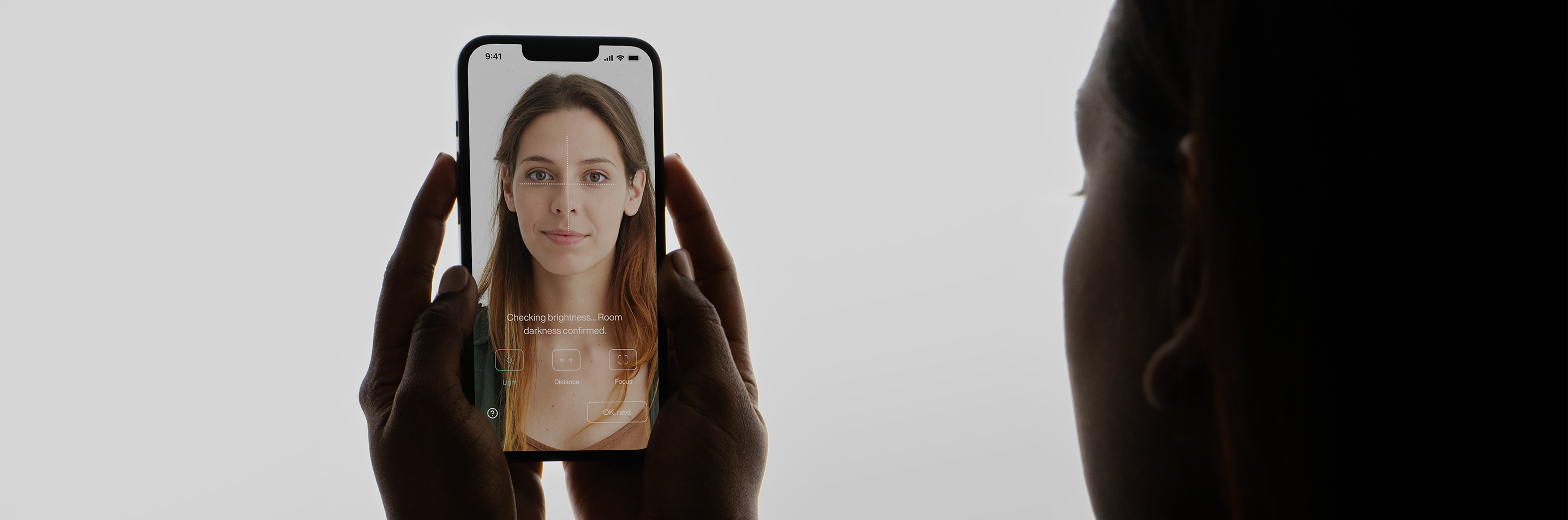
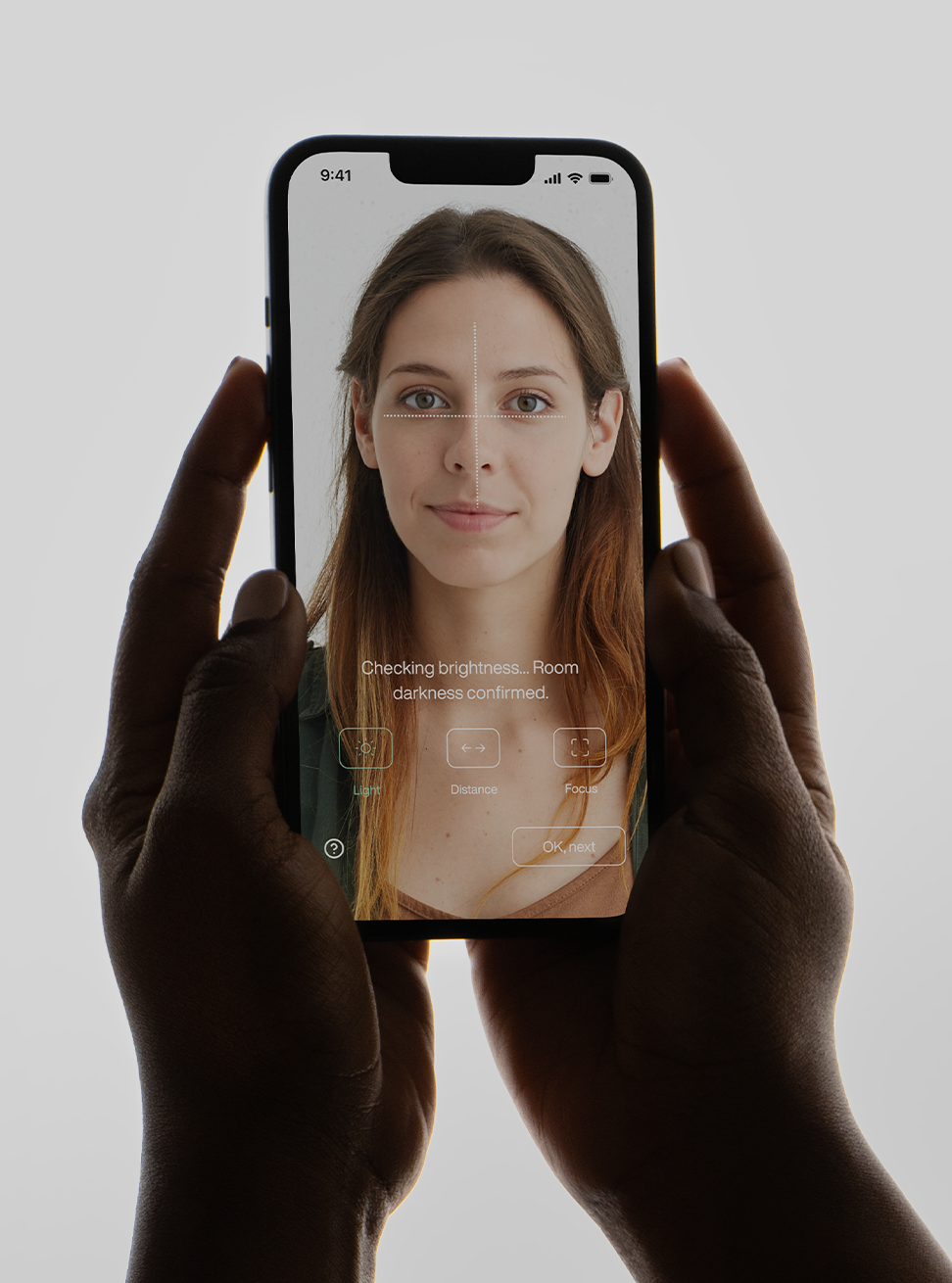
VisionCheck takes a major step forward in scalable smartphone vision screening
Today, we are launching one of the most significant upgrades to VisionCheck since its debut, advancing its potential for partners, customers, and healthcare providers.
The new version delivers a more comprehensive screening experience, identifies a broader range of refractive errors, and introduces device-specific technology to improve test quality across smartphones. It also strengthens the infrastructure needed to deploy VisionCheck reliably at scale.
A more comprehensive vision screening
The biggest change is our new Advanced Test, now the default VisionCheck experience.
VisionCheck can now screen for a broader range of refractive errors, including signs associated with astigmatism, while intelligently adapting the test based on what it detects.
For the user, the experience remains simple. Behind the scenes, however, VisionCheck now uses more information before deciding whether to refer someone for a full eye exam.
Most importantly, the new screening flow is designed to significantly reduce missed cases.
For a screening product, this matters a great deal. VisionCheck is not designed to provide a prescription or replace an eye care professional. It identifies people who may have a vision problem and should be referred for further examination. The fewer people we miss, the more valuable screening becomes.
Improving test quality across smartphones
We are also introducing our proprietary, device-specific distance-estimation technology.
Different smartphones have different cameras, lenses, and characteristics. VisionCheck can now account for the specific device being used and guide users toward the optimal testing distance.
The technology runs in the background, but it matters: it improves standardisation and makes testing more consistent across devices, users, and locations.
Built for large-scale deployment
The third major improvement is a new server-side device capability and support system.
We can now centrally manage which smartphones VisionCheck supports and continuously update device compatibility without requiring a new app release.
As VisionCheck moves into larger deployments involving thousands of screenings and multiple device types, this becomes increasingly important. It allows us to expand and manage the supported device base much faster while maintaining control over the quality of the screening experience.
Why this matters
For partners looking to bring vision screening into new environments, these improvements offer practical value.
Better detection reduces the risk of missing people who need follow-up care. Improved standardisation helps deliver more consistent screening across different smartphones and settings. Stronger deployment infrastructure also makes it easier to roll out and manage larger screening programmes over time.
Together, these improvements make VisionCheck better suited for real-world screening outside traditional clinical environments, where accessibility, consistency, and operational simplicity matter.
From a phone to a scalable screening platform
This release represents an important step forward for VisionCheck.
We are screening for more types of refractive error. We are reducing the risk of missing people who should be referred. We are improving standardisation across smartphones. We are also building the infrastructure needed to deploy VisionCheck at a much greater scale.
The opportunity for vision screening extends far beyond the traditional clinic.
From optical retail and community health programmes to schools and other environments where vision matters, a smartphone can bring screening closer to people who might otherwise never be tested.
That is what we are building VisionCheck for.
